


Volunteering at an Animal Shelter vs. Fostering a Dog: Which Is Better For Your Schedule?

You want to help dogs in need. You really do. But you're staring at your calendar wondering how on earth you're going to fit it in between work, family, that thing called sleep...
Here's the good news: there's more than one way to make a real difference. And the even better news? One of these options might fit your life way better than you think.
Let's break down volunteering at an animal shelter versus fostering a dog, and help you figure out which one actually works with your schedule.
What Does Volunteering at a Shelter Actually Look Like?
Volunteering sounds straightforward, right? Show up, hang out with dogs, feel good. But here's what most people don't realize: shelter volunteering comes with some pretty specific requirements.
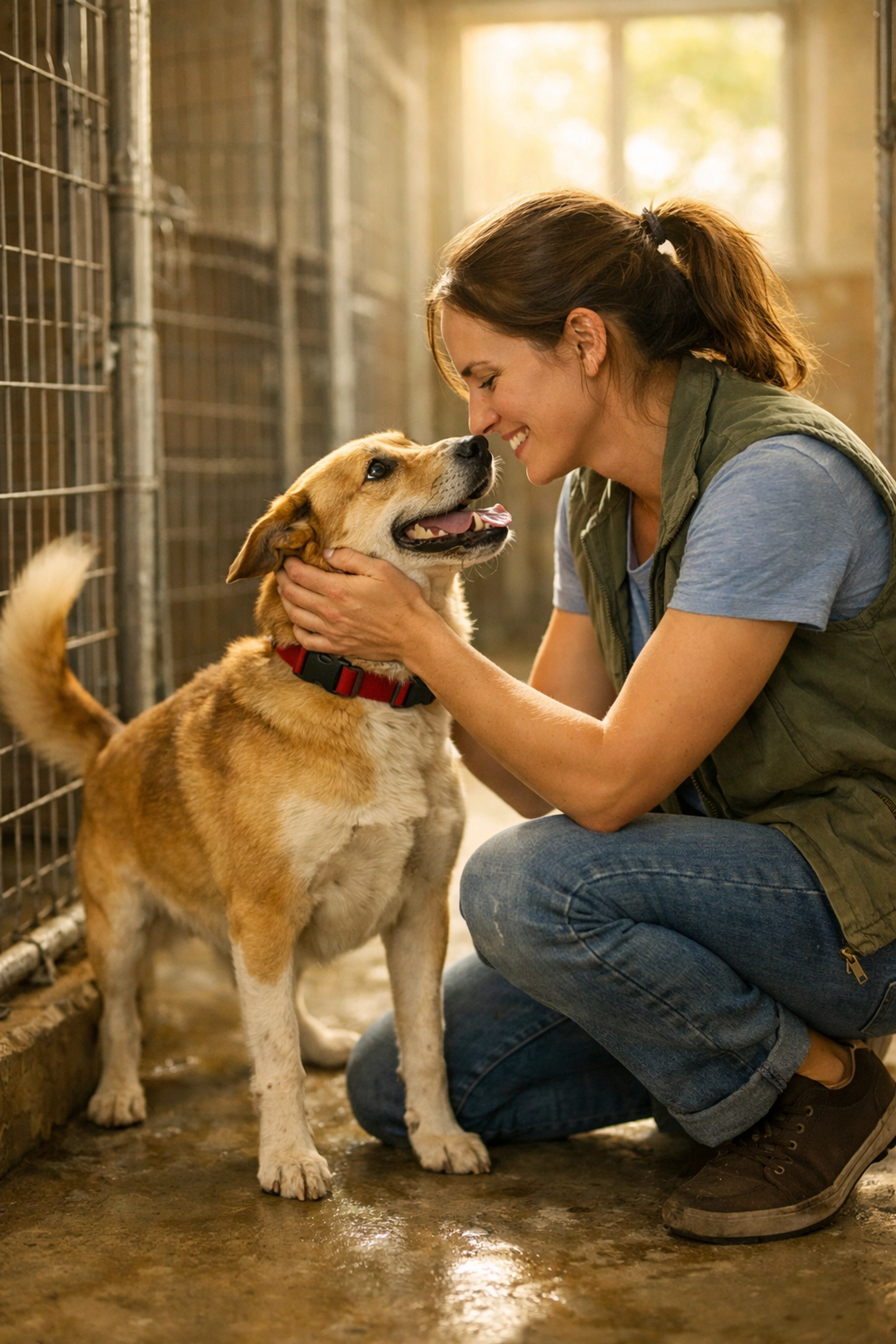
Different shelters have wildly different expectations. Some want you there for 100 hours over six months. Others ask for a weekly 3-4 hour shift for three months. And a few are super flexible, just show up when you can.
Here's what the research shows about common time commitments:
High commitment: 100 hours within 6 months (that's roughly 4 hours a week)
Moderate commitment: 6 hours monthly for 6 months (about 90 minutes per week)
Lower commitment: One 3-4 hour shift weekly for 3 months
Most flexible: No required commitment, just regular shifts encouraged
Most shelters also require the same day and time each week. That's great if you have a predictable schedule. Not so great if your work shifts change or you travel for your job.
And don't forget training. Depending on the role, you might need anywhere from 2.5 to 10+ hours of training before you can start. That's an upfront investment before you even walk your first dog.
What About Fostering a Dog?
Fostering is a whole different animal. Literally.
Instead of showing up at a shelter for scheduled shifts, you bring a dog into your home. You become their temporary family while they wait for their forever home.

The time commitment? It's 24/7... but not in the way you might think.
Yes, the dog is with you around the clock. But you're not actively "working" the whole time. You're just living your life: with a dog. They hang out while you watch TV. They sleep while you sleep. They're there when you get home from work.
Most fostering situations last anywhere from a few weeks to a few months, depending on how quickly the dog gets adopted. Senior dogs or dogs with special needs might stay longer, but that's something you discuss upfront with the rescue.
The beautiful thing about fostering? You set the boundaries. You tell the rescue what works for your life. Weekend-only foster? Short-term emergency foster? Long-term foster for a senior dog? There's usually an option that fits.
If you've never fostered before, our guide on how to foster a dog for the first time walks you through the entire process: it's way easier than you think.
The Honest Comparison: Which Takes More Time?
Let's put them side by side.
Volunteering at a Shelter:
Fixed schedule (usually the same day/time weekly)
3-6 hours per week on average
Requires leaving your house and commuting
Training required upfront
Multi-month commitment (usually 3-6 months minimum)
You can "clock out" when your shift ends
Fostering a Dog:
Flexible daily schedule (dog fits into YOUR routine)
Time blends into your existing life
Happens at home (no commute)
Minimal training (orientation and support provided)
Variable length (a few weeks to several months)
Dog is with you 24/7 (but so is your couch, your bed, your Netflix...)
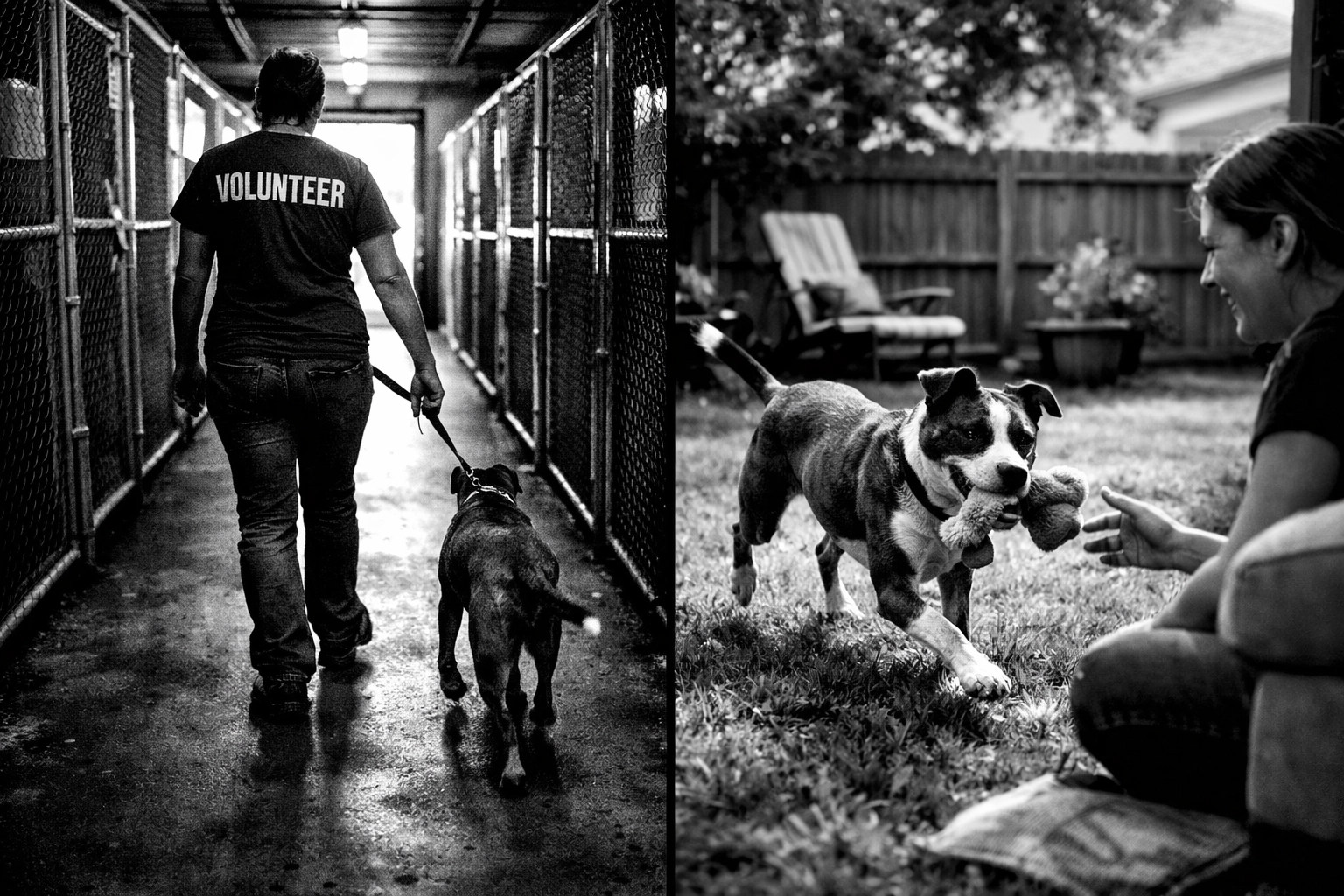
Here's the real question: Do you have a predictable schedule with a few free hours each week? Or do you have an unpredictable schedule but space in your daily life?
If you work 9-5 Monday through Friday and have Saturday mornings completely free, volunteering might be perfect. You show up, do your thing, and leave knowing you made a difference.
If your schedule is all over the place: but you're home a lot, work from home, or have a flexible lifestyle: fostering could be your sweet spot. The dog adjusts to you, not the other way around.
What If You Have Kids? A Partner? Roommates?
Volunteering usually just involves... you. Your family or roommates don't need to be involved. You go, you volunteer, you come home.
Fostering involves everyone in your household. Your kids will meet the dog. Your partner needs to be on board. Your roommate should probably know there's going to be a pup in the living room.
But here's the flip side: fostering can be an incredible family activity. Kids learn responsibility and compassion. Your household rallies around a shared purpose. And honestly? It's pretty special to watch a rescue dog blossom in a loving home.
We've seen families completely transform when they foster. If you're curious about why fostering is such a game-changer, that post breaks it down beautifully.
The Sneaky Third Option: Do Both
Who says you have to choose?
Some people volunteer at a shelter once a week and foster a dog at home. It's not as crazy as it sounds.
Your weekly volunteer shift might be walking dogs or helping with adoption events: tasks that don't require you to be home. And your foster dog? They're chilling at home, probably napping on your couch while you're out helping other dogs.

The two roles complement each other surprisingly well. Volunteering keeps you connected to the shelter community and gives you hands-on experience with different dogs. Fostering lets you make a deep, personal impact on one dog's life.
How Donations Support Volunteers and Foster Families
You might be thinking… “Okay, I get it. Volunteering and fostering both matter. But where do donations actually go?”
Right here—into the practical stuff that makes rescue possible.
Your donation helps support volunteers by covering things like:
Training supplies and tools (treats, leashes, long lines, clickers)
Cleaning and enrichment supplies (disinfectant, laundry soap, puzzle toys)
Safety essentials (crate pads, slip leads, muzzles when needed)
Support for adoption events and outreach materials
Your donation helps support foster families by helping pay for:
Vet bills (vaccines, exams, spay/neuter, medications, emergency care)
Food and basic supplies (bowls, crates, beds, pee pads)
Special medical or recovery needs (post-surgery supplies, mobility support)
Behavior support resources when a dog needs extra help settling in
Every dollar is basically you saying: “We’ve got you.” To the dog. To the volunteer showing up week after week. And to the foster family making space at home.
So... Which One Should You Choose?
Ask yourself these questions:
Choose volunteering if:
You have a consistent weekly schedule
You want a clear start and end to your commitment
You prefer structured tasks and roles
You want to help lots of dogs without bringing one home
Your living situation doesn't allow for a dog (apartment restrictions, landlord rules, allergies)
Choose fostering if:
Your schedule changes week to week
You have space in your home and heart
You're comfortable with the unknown (you won't know exactly how long they'll stay)
You want deep, meaningful impact with one dog
Your household is on board
Choose both if:
You're a total overachiever (we love that for you)
You have the time, space, and energy
You want maximum impact
There's no wrong answer here. The best choice is the one you'll actually stick with.
Ready to Take Action?
We need you. Whether you volunteer for three hours a week or foster a senior dog for three months, you're changing lives.
And the fastest way to help right now? Donate.
Because donations don’t just “support the sanctuary.” They cover the real, immediate needs that keep dogs safe and keep the humans who help them supported too… vet bills, meds, food, crates, training supplies, and basic care for foster homes and volunteers.
👉 Make a donation today:Donate to Their Best Life Dog Sanctuary If you can, consider setting up a monthly gift… even a small amount adds up to steady care.

If you’re also ready to jump in with your time…
If volunteering sounds like your jam, check out our beginner's guide to volunteering at an animal shelter: it'll tell you exactly what to expect.
If fostering is calling your name, start with this easy 5-step guide and reach out to us. We'll match you with a dog who fits your lifestyle.
Not sure yet? Head to our Take Action page to explore all the ways you can help: some you probably haven't even thought of yet.
The dogs don't care which option you choose. They just care that you showed up.
Will you?
: Chip 🐾 Latest rescue at Their Best Life Dog Sanctuary
Comments