


Looking to Volunteer at an Animal Shelter? Here Are 10 Things You Should Know
- Chip

- Jan 30
- 6 min read
So you're thinking about volunteering at an animal shelter? That's amazing. Seriously.
Every year, millions of dogs end up in shelters across the country, some abandoned, some surrendered, some just waiting for someone to notice them. And volunteers like you? You're the ones who make their days a little brighter while they wait for their forever homes.
But before you show up in your dog-walking shoes ready to save the world, there are a few things you should know. Not to scare you off, just to set you up for success. Because volunteering at an animal shelter isn't quite like what you see in the movies. It's better... and sometimes messier. And definitely more rewarding than you'd think.
Here are 10 things every first-time animal shelter volunteer should know before diving in.
1. You'll Need to Meet Age Requirements (But There's Flexibility)
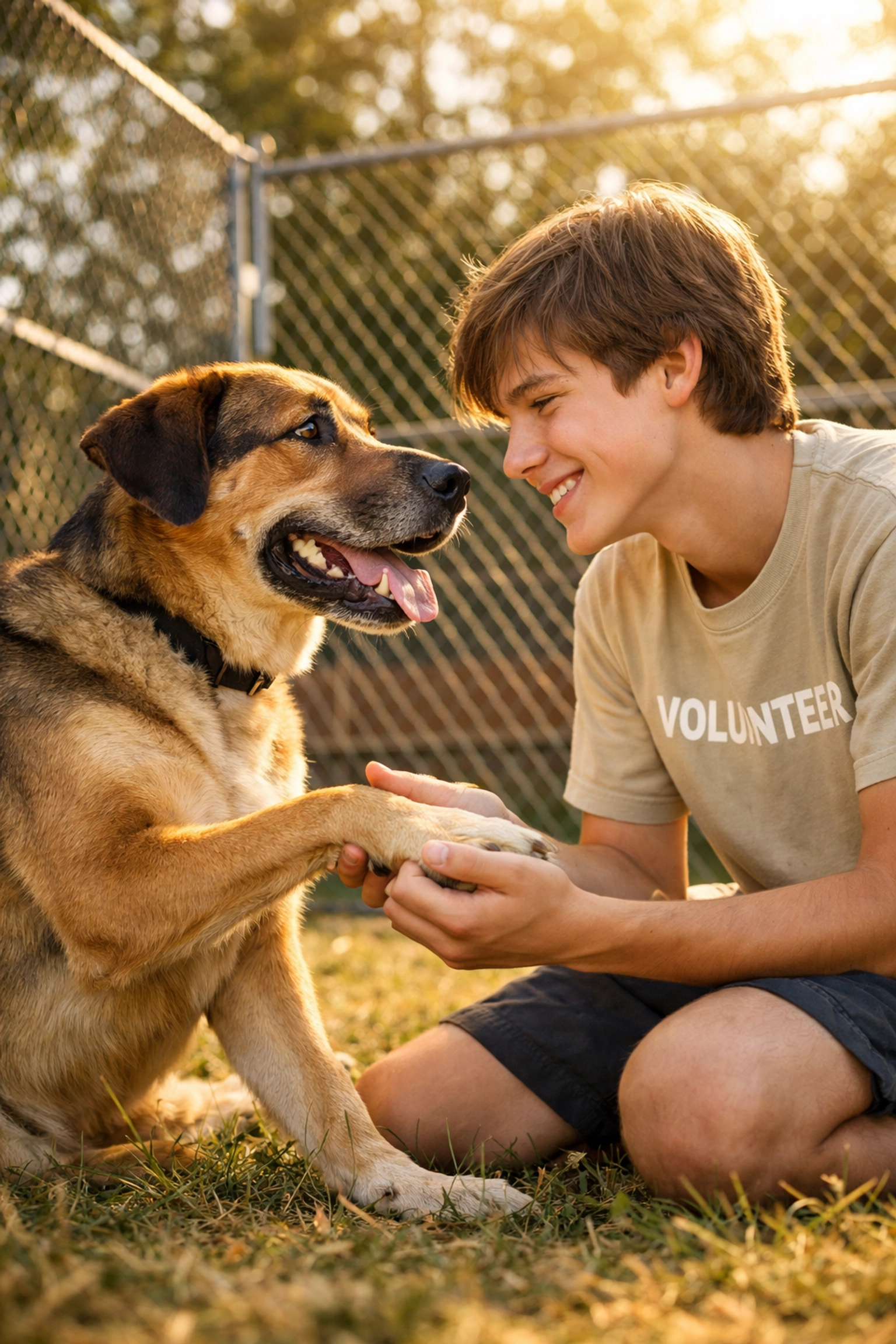
Most shelters require volunteers to be at least 16 to 18 years old for independent roles. That means if you're planning to walk dogs solo or handle kennel duties, you'll probably need to be close to adulthood.
But don't let that stop you if you're younger. Many shelters, including ours at Their Best Life Dog Sanctuary, welcome younger volunteers when they're accompanied by a parent or guardian. Some programs accept kids as young as 10 or 12 when they have an adult alongside them.
Why the age restrictions? Safety, mostly. Dogs in shelters can be unpredictable, and some roles require physical strength or emotional maturity to handle challenging situations.
Bottom line: Check with your local shelter about their specific age policies. And if you're a parent looking for a meaningful family activity, this could be it.
2. It's a Commitment, Not a One-Time Gig
Here's the thing shelters won't always tell you upfront: they're not really looking for one-and-done volunteers.
Most animal shelters need people who can commit to regular, consistent shifts, think weekly or at least a few times a month for a minimum of 6 to 12 months. Some shelters ask for as little as three shifts per month, while others prefer weekly 3-hour blocks.
Why? Because the animals thrive on routine. And frankly, so does the shelter staff. When you show up consistently, you become a familiar face to the dogs, you learn the ropes, and you become genuinely helpful instead of just another person who needs supervision.
If you can only spare a Saturday here and there, that's okay, just be upfront about it. But understand that most shelters are looking for the long haul.
3. Orientation and Training Are Non-Negotiable
You can't just waltz in and start cuddling puppies. (Trust us, we wish it worked that way too.)
Every reputable shelter requires new volunteers to complete in-person orientation and training before they let you near the animals. This usually covers things like:
Shelter policies and procedures
How to safely handle dogs of different temperaments
Recognizing signs of stress or aggression
Cleaning protocols and disease prevention
Emergency procedures
Depending on your role, you might need additional specialized training, like foster care orientation or certifications in fear-free handling techniques.
It might feel like a lot, but this training protects you, the staff, and most importantly, the dogs. So show up ready to learn.
4. There Are Way More Roles Than You Think
When most people imagine volunteering at an animal shelter, they picture themselves walking dogs or playing with puppies in a yard.
And yeah, that's definitely part of it. But shelters need help with so much more:
Dog walkers – Getting pups outside for exercise and fresh air
Cat socializers – Spending time with felines who need human interaction
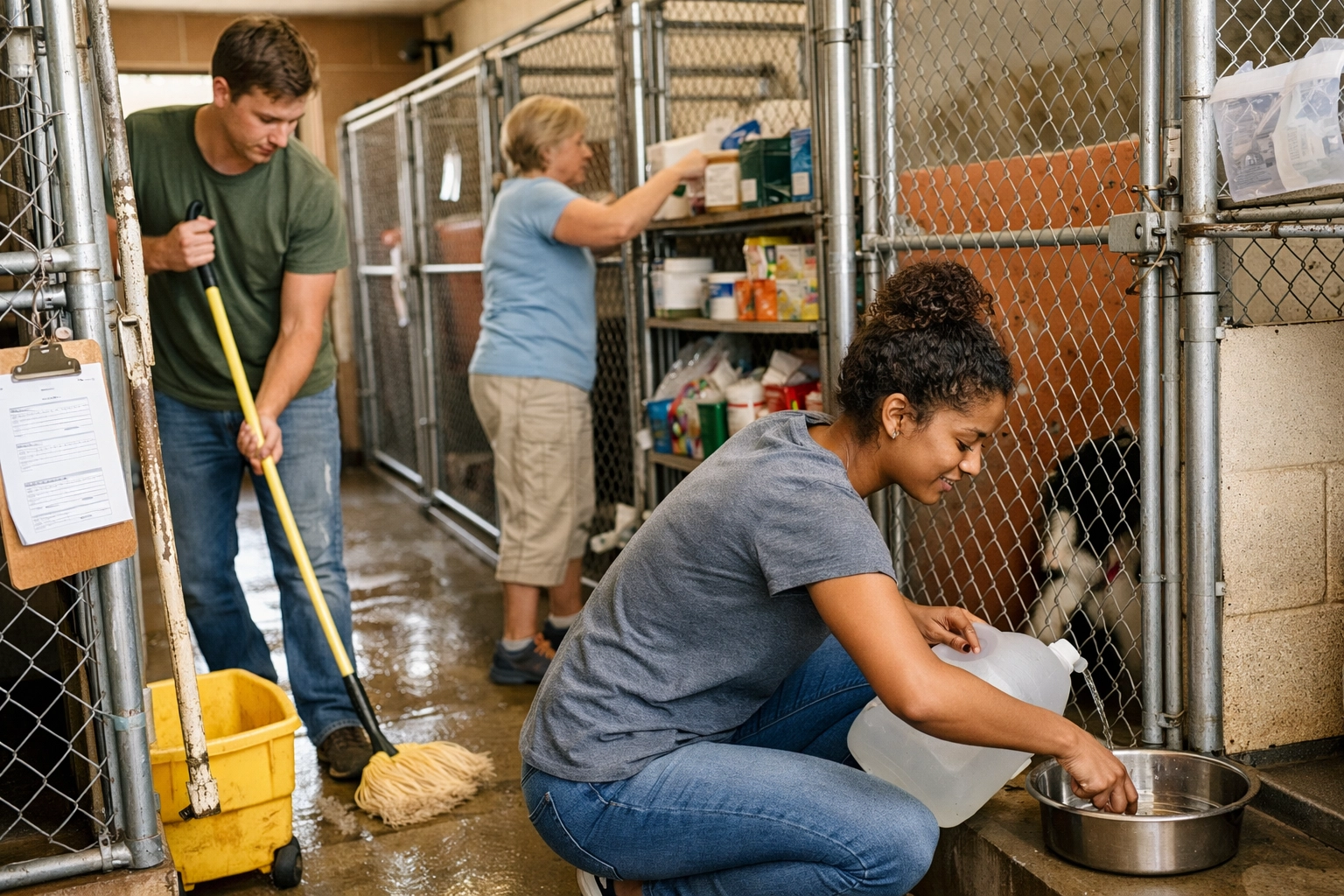
Kennel cleaners – Keeping spaces sanitary (not glamorous, but critical)
Greeters – Welcoming potential adopters and answering questions
Event volunteers – Helping at adoption events or fundraisers
Foster coordinators – Supporting people who take dogs home temporarily
Social media helpers – Photographing dogs and writing bios to help them get adopted
Each role has different requirements. Dog handlers, for example, might need to be 18+ and able to lift 50 pounds or walk a mile or two per shift. Cat care and cleaning roles often have different physical or age requirements.
Pro tip: Be honest about your strengths and limitations when you apply. There's a role that fits you.

5. You've Got to Actually Care About the Animals
This might sound obvious, but it's worth saying: passion for animal welfare is essential.
Shelters can teach you the skills. They can't teach you to care.
Volunteers who thrive are the ones who genuinely want to make a difference, who show up with a positive attitude even on hard days, who follow instructions, and who can work independently or as part of a team without constant hand-holding.
If you're just looking to pad a college application or kill time, please reconsider. These dogs deserve people who are all in.
6. Fostering Has Its Own Set of Rules
Thinking about fostering a dog in your home? That's incredible, and it's one of the most impactful ways to help a shelter. But it comes with additional requirements.
Foster volunteers typically need to:
Transport pets to veterinary appointments
Attend adoption events or meet-and-greets
Have any current household pets spayed/neutered and up-to-date on vaccinations
Provide a safe, stable home environment
If you're interested in fostering, check out our guide on why fostering is one of the best ways to help. It's a bigger commitment than regular volunteering, but it literally saves lives.
7. Background Checks and Paperwork Are Part of the Deal
Most shelters will ask you to fill out a volunteer application, provide a photo ID, and share a working email address. Some may also run background checks, especially for roles that involve handling money, working with vulnerable populations, or having unsupervised access to animals.
This isn't about being nosy. It's about protecting the animals, the staff, and other volunteers.
Also worth noting: most shelters can't accept court-ordered community service volunteers. If you're trying to fulfill a legal requirement, you'll need to look elsewhere.
8. Some Shelters Charge a Small Program Fee
Not all shelters do this, but some charge a one-time program fee, usually around $25, plus annual renewal fees to cover volunteer materials, training resources, t-shirts, and background checks.
It's not about making money. Running a volunteer program costs time and resources, and that small fee helps offset those expenses.
If cost is a barrier, ask if they offer waivers or payment plans. Many shelters would rather have your time than turn you away over a fee.
9. Flexibility Exists, But Consistency Is King
A lot of shelters let you set your own schedule to some degree. You're not punching a time clock.
But here's the catch: they strongly prefer volunteers who commit to a set weekly time slot. Why? Because it helps with planning, ensures adequate coverage, and gives the dogs a routine they can count on.
So yeah, you might have flexibility. But if you can pick a regular day and time and stick with it, you'll be the kind of volunteer every shelter dreams about.
10. The Emotional Ups and Downs Are Real
Let's be real for a second. Volunteering at an animal shelter is not all puppy kisses and happy endings.
You'll meet dogs who've been neglected, abused, or abandoned. You'll see animals get adopted... and you'll see some wait for months. You'll fall in love with a dog you can't take home. You'll clean up messes. You'll deal with difficult personalities, both canine and human.
But here's the truth: you'll also witness resilience. You'll see scared dogs learn to trust again. You'll be there the moment a lonely pup finally finds their family. You'll realize that even the "small" stuff you do, walking a dog, refilling a water bowl, posting a photo on social media, makes a real, tangible difference.
It's hard. But it's worth it.
Ready to Take the Leap?
If you've read this far and you're still thinking, "Yeah, I want to do this," then you're exactly the kind of person shelters need.
Volunteering at an animal shelter near you isn't just about helping dogs. It's about being part of a community of people who believe animals deserve better. It's about showing up consistently, even when it's hard. It's about making a difference in ways you might not even see.
At Their Best Life Dog Sanctuary, we're always looking for compassionate, committed volunteers who want to be part of something bigger. Whether you're walking dogs, cleaning kennels, or spreading the word about adoptable pups, you're helping us give these animals their best life.
Sound like something you'd be into? Learn more about how you can take action and join our community of animal lovers.
Because every dog deserves someone who shows up. Will you be that person?
Comments